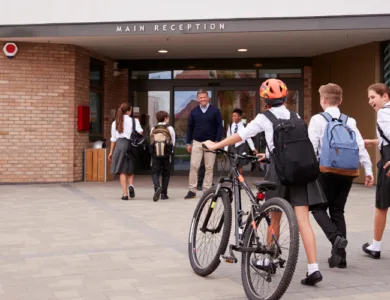
Moving to the UK to teach sounded like a dream: rolling hills, old brick buildings, accents that made everything sound fancy and fun-filled classrooms. I was chuffed to bits (super excited!). But on day one, I quickly realised I was fluent in English… just not British slang.
By lunch, I’d been asked if I was “bursting,” told the printer was “proper dodgy,” and overheard someone saying they were “skint,” “knackered,” and had just “had a mare.” I genuinely wondered if I had accidentally been cast in a Harry Potter spinoff.
So, fellow North Americans, especially my fellow Canucks, if you’re heading to the UK to teach, tuck in and let me guide you through some classic British slang you’ll definitely hear.
School life shenanigans
- “You alright?”
Translation: Hi! Not an inquiry about your emotional state. No need to unpack your existential dread. To respond, just say, “Yeah, you?” - “Skiving”
Means skipping school. Not that you’d do it, but your students might. - “Spend a penny”
When a 7-year-old says this, they’re off to the toilet, not buying penny candy. - “Whinge”
This is whining. If a kid’s whinging, they’re complaining. Probably about having to actually get some work done. - “Excluded”
Sounds ominous, but it just means suspended or temporarily removed from school. Don’t panic.
Everyday conversations
- “Cuppa?”
Always means tea. It could also be the start of a 20-minute gossip session in the staffroom. - “Tea”
Confusingly, this can be a drink or dinner. So when someone invites you “round for tea,” don’t show up expecting just a cuppa and a biscuit. You’ll be eating a full meal. Maybe even a jacket potato! - “Have a think”
They’re not dismissing you. It just means they need a moment to consider your request… like whether to swap lunch duty. - “Bagsy!”
British for “dibs.” If someone bagsies the last chocolate biscuit, it’s theirs. Harsh, but fair. - “Cheers!”
It can mean thanks, goodbye, or just… nothing. You’ll hear it 72 times a day. - “C ya later”
Also, it doesn’t necessarily mean they will, in fact, see you later. It’s just a casual goodbye. - “Nice”
Often used to describe food. Not a personality trait, more of a “mmm, this lasagna is decent” kind of thing.
Expressions that left me confused
- “Full of beans”
Energetic. I initially thought it was a weird diet reference. Nope, just your year 4s after lunch. - “Throwing a spanner in the works”
Like throwing a wrench into plans. Means something unexpected messed things up. Like the WiFi. Again. - “Bob’s your uncle”
No, he probably isn’t. But it means: there you go, done and dusted. - “It’s gone pear-shaped”
Something’s gone wrong. Like a lesson observation or your attempt to cook “pudding” (which, by the way, means dessert, not necessarily actual pudding).
Money matters
- “Quid”
One quid = one pound (£). Not a fish. Not a snack. Just money. - “Skint”
Broke. Penniless. This will happen after your first visit to a London pub.
People, clothing and madness
- “Bloke”
Just a guy. “He’s a good bloke” = decent dude. - “Dodgy”
Untrustworthy or shady. Can apply to people, electronics, or less-than-stellar takeaway. - “Chuffed to bits”
Absolutely delighted. I was chuffed to bits when my year 6s aced their maths exams. - “Cheeky”
Slightly naughty but in a funny, lovable way. Like your student sneaking extra stickers from your desk. - “Knackered”
Totally exhausted. Use this one daily. It’ll bond you with every other teacher in the country. - “Had a mare”
A terrible day. Common usage: “Spilt coffee on my day planner and got a flat tyre. Had an absolute mare.”
Food that’s not what you think
- “Crisps” = Chips
- “Chips” = Fries
- “Pudding” = Dessert in general
- “Mince” = Ground beef
- “Mince pie” = Sweet spiced dried fruit pastry that appears everywhere in December. No meat. Zero mince. Confusing? Very.
And finally… A few to keep you from totally embarrassing yourself
- “I’m poorly”
They’re sick, not delicate and Victorian. - “Pants”
Means underwear. So when someone says your idea is “pants,” they’re saying it’s garbage. Not that it’s well-supported. - “Jumper” = Sweater
- “Boot of the car” = Trunk
- “Bin” = Garbage can, not the plastic container you’ve asked your students to place their workbooks in (trust me!)
- “Loo” / “Toilet” = Washroom
- “Gotcha”
They understand you, not that they’ve caught you in the act.
Living and teaching in the UK has been one of the most rewarding adventures of my life, but it’s also led to some funny, weird moments. British slang is quirky, charming, and wildly inconsistent. Once you get the hang of it, it becomes part of the fun.
Ready to start your UK teaching adventure? You’ve got the lingo, now let us guide you through the rest! Register with us today and make your move to the UK smooth, fun and stress-free, from finding your classroom to settling into your new life.