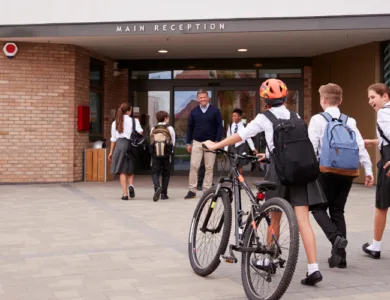
Are you interviewing to become Support Staff in a School?
We’ve used our many years of experience placing thousands of teachers and support staff to create this bespoke and tailored guide. Inside, you’ll find our best interview tips, trial day advice, and what we feel are helpful resources to make you feel prepared and confident.
No matter what your experience level or how many interviews you’ve been to, we highly recommend reviewing this before your interview with us to give yourself the best possible start.
📑 Contents
- Tips to get started: the foundation
- The STAR Method
- Section for TAs & Support Staff
- Dedicated section: Safeguarding (the “must-knows”)
- Final “interview day” checklist
- After the interview: reflection & feedback
- Conclusion
- Online resources and key links
1. Tips to get started: the foundation
Before practicing your answers, build your knowledge base:
- Research the School: Understand the community. Check the school’s “Values” or “Mission Statement” on their website.
- School performance: Search School Performance Tables
- Ofsted reports: Identify strengths and “Areas for Improvement”. Search Ofsted Reports
- Audit your experience: Write a list of your strengths and achievements with previous pupils.
- Presentation: Choose attire carefully. Demonstrate good body language – eye contact and a warm smile are essential.
- Commitment: Sell yourself! If you don’t sound committed you are unlikely to be successful
2. The STAR Method
🏗️ How to structure your answers: The STAR-I Method
- Situation: Set the scene briefly.
- Task: What was the challenge or goal?
- Action: What did you specifically do?
- Result: What changed?
An enhancement to the above can include talking about how your results from these situations and your actions have driven real impact:
- Impact: How did this benefit the student’s learning or well-being?
3. Support staff guidance
Interviewer focus: Proactivity, Scaffolding, and Teamwork.
🏗️ Understanding the TA Role: the gradual release of responsibility
When answering questions about “support,” it is helpful to visualise the Gradual Release of Responsibility (GRR). A TA’s job is to help students move through this to eventually allow for independent practice.
- I do (focused instruction): The teacher models the skill, utilises think-aloud, and sets clear expectations.
- We do (guided practice): The teacher and students work together, with the teacher providing scaffolds and checking for understanding.
- You do together (collaborative learning): Students work in pairs or small groups to apply skills with teacher supervision.
- You do alone (independent practice): Students complete tasks independently to demonstrate mastery.
💡 Pro-tip for TA Candidates: “the clip-on” method
If you are asked how you manage a classroom alongside a teacher, mention that you aim to be a “Clip-on” to the teacher’s lesson—you reinforce their language, use their hand signals, and mirror their expectations so the students receive one consistent message.
📝 TA/LSA Question Bank
| Question | What the School is looking for |
| “A student refuses to work. What do you do?” | Resilience & De-escalation. Mention breaking tasks into “bite-sized” chunks or using a “Now and Next” board. |
| “How do you handle student dependency?” | Promoting Independence. Mention “fading” support—stepping back once they start a task and checking in later. |
| “What if you disagree with a teacher’s method?” | Professionalism. Never contradict in front of kids. Mention a private, polite conversation later to suggest an idea. |
| “How do you scaffold a difficult instruction?” | Adaptability. Explain how you “translate” teacher talk into visuals or simpler steps for a specific student. |
| “What do you think is the best way to motivate pupils?” | Rapport & Personalisation. Mention that motivation isn’t “one size fits all.” Talk about using a student’s specific interests to frame a task, or using low-stakes “mini-wins” to build their confidence. |
| “What are your views on a school’s rewards and sanctions?” | Consistency & Policy. Mention that rewards should be frequent and meaningful, while sanctions should be calm, fair, and follow the school’s specific behaviour ladder. |
| “What do you understand by the term ‘providing support’ for the pupil?” | The “Enabler” vs. “Doer.” Explain that support means removing barriers to learning. This includes scaffolding a task so a child can access it, supporting emotional regulation, or modifying a resource—not doing the work for them. |
4. Dedicated section: safeguarding
This is the most critical part of any school interview. If a candidate cannot demonstrate a clear understanding of safeguarding, they cannot be hired.
🌟 The golden rule: “it could happen here”
The most important mindset for any educator is to avoid complacency. The “golden rule” of safeguarding is: Safeguarding is everyone’s responsibility.
- Never assume: Don’t think, “that child is just tired,” or “the parents are just stressed.”
- Professional Curiosity: If something feels “off,” it is your duty to investigate or report it.
- A United Front: You are part of a network. Your piece of information might be the final “puzzle piece” the school needs to protect a child.
🛡️ The disclosure protocol (step-by-step)
If a child approaches you to disclose a concern or abuse, you must follow these four steps (often referred to as the 4 Rs: Receive, Reassure, Record, Report):
- Receive (Listen):
- Listen quietly and provide your full attention.
- Do not interrupt or “probe” for details.
- Do not ask leading questions (e.g., “did your dad hit you?”). Only ask open questions if necessary (e.g., “can you tell me more about that?”).
- Reassure:
- Tell the child they have done the right thing by speaking up.
- CRITICAL: Never promise to keep a secret. You must say: “I am so glad you told me, but I have to tell someone who can help keep you safe.”
- Record:
- Write it down as soon as possible (ideally within the hour).
- Use the child’s exact words. Do not translate their slang or “clean up” their language.
- Record facts, not opinions (e.g., “the child had a 2cm bruise on their left arm,” rather than “the child looked like they had been hit”).
- Report:
- Immediately inform the DSL (Designated Safeguarding Lead) or their deputy.
- Follow the school’s internal reporting system (e.g., CPOMS or MyConcern).
Not sure what to do, email our safeguarding experts – safeguarding@engagepartners.co.uk
❓ Example interview question
Question: “You notice a child has become increasingly withdrawn over the last two weeks, and today you noticed a small, unexplained bruise on their neck. What is your immediate course of action?”
The “winning” answer focus:
- Acknowledge the pattern: “I would recognise that the change in behaviour (becoming withdrawn) combined with a physical mark is a significant red flag.”
- The action: “I would not wait. I would immediately check the child’s file on our safeguarding software to see if there is a history of concerns. I would then report this directly to the DSL before the end of the school day.”
- Professionalism: “I would keep this information strictly confidential and not discuss it with other TAs or teachers, only the DSL.”
🔗 Key statutory documentation
5. Final “interview day” checklist
🌙 The night before
- Paperwork: Passport/ID, DBS proof, and physical copies of your certificates. Most schools will not let you on the premises without these documents
- Research refresh: Re-read the school’s latest Ofsted report and their “Values” page. Pick one specific “value” you can mention in your answers.
- Route planning: Check for roadworks or public transport delays. Aim to arrive in the local area 30 minutes early, but only enter the school 10 minutes before your slot.
☕ The morning of
- Dress rehearsal: Ensure your attire matches school expectations. Not sure speak to your consultant or the school HR
- Hydration & fuel: Eat a steady breakfast. Schools are high-energy environments; you don’t want to run out of steam by mid-day.
- Digital silence: Turn your phone completely off before you enter the school gates.
🧠 The “walk-in” mindset
- The receptionist: Be incredibly kind and professional. They are the eyes and ears of the school. Their feedback to the Headteacher is often the “deciding factor.”
- First impressions: As soon as you step onto school grounds, you are being interviewed. Smile at staff and students you pass in the corridor.
- Body language: Maintain an open and alert posture. No hands in pockets or arms crossed. Use “active listening”—nod and tilt your head slightly when the interviewer speaks.
- The “why”: Before you go in, pause and remind yourself: “I am here because I have the skills to make a difference for these children.”
6. After the interview: reflection & feedback
✅ Immediate actions
- Say Thank You: Sounds basic but this is important. Take a moment to thank the interviewers for their time. They’ve put time and effort into preparing for this as much as you have!
- The “pat on the back”: Regardless of the outcome, pat yourself on the back for completing a high-pressure day. Every interview is a valuable learning experience.
🧠 Reflection exercise
While the experience is fresh, briefly jot down your thoughts:
- The wins: Which questions did you feel went well and why?
- The adjustments: Which questions did you struggle with? Use this to restructure your STAR stories for the next time.
- Environment: Did the school’s atmosphere feel like a place where you could thrive?
📞 The feedback process
- Communication: We will provide you with feedback as soon as we receive it.
- Expectations: Be aware that feedback varies. Some schools are very forthcoming and detailed, while others may provide none at all.
- Growth: Use whatever information you receive to refine your technique and stay committed to your next opportunity.
7. Conclusion
🏆 Summary of success
If you remember nothing else, keep these five pillars of a successful Engage Education interview practices in mind:
- Preparation is your Superpower: Researching the school’s performance and core values isn’t just “homework” – it’s what allows you to speak as if you already belong there.
- The 4 Rs are non-negotiable: Safeguarding is the “Pass/Fail” of school interviews. Be ready to prove you can Receive, Reassure, Record, and Report without hesitation. Never promise a child a secret.
- Structure equals clarity: When a question starts with “Tell us about a time…”, immediately trigger your STAR-I brain. Focus heavily on the Action (what you did) and the Impact (how it helped the child).
- Rapport over resources: In a trial lesson, observers aren’t looking for the world’s best PowerPoint. They are looking for how you talk to students, use their names, and adapt when they get stuck. Connection before content.
- The “whole-day” interview: From the moment you greet the receptionist to the moment you leave the car park, you are being assessed. Every interaction is a chance to show your professionalism, warmth, and commitment.
The final thought: Schools don’t just hire qualifications; they hire people. Be authentic, show your passion for supporting young people, and demonstrate that you are a reflective professional who is always willing to learn.
Good luck, you’ve got this!
8. Online resources & key links
To help you visualize the “perfect” interview and stay up-to-date with current UK education standards, we recommend exploring the following resources:
🎥 Video guides (YouTube)
📚 Essential reading (the “must-knows”)
🛠️ Practical tools
- School Performance Tables: Use this to find the “Progress 8” or “Attainment 8” scores for your specific school.
- Ofsted Search: Read the “What the school needs to do to improve” section of their latest report. Use this to explain how your skills can help them reach those goals.
- ChatterPack SEND Resource: An incredible resource for understanding how to support students with Special Educational Needs (SEND).